
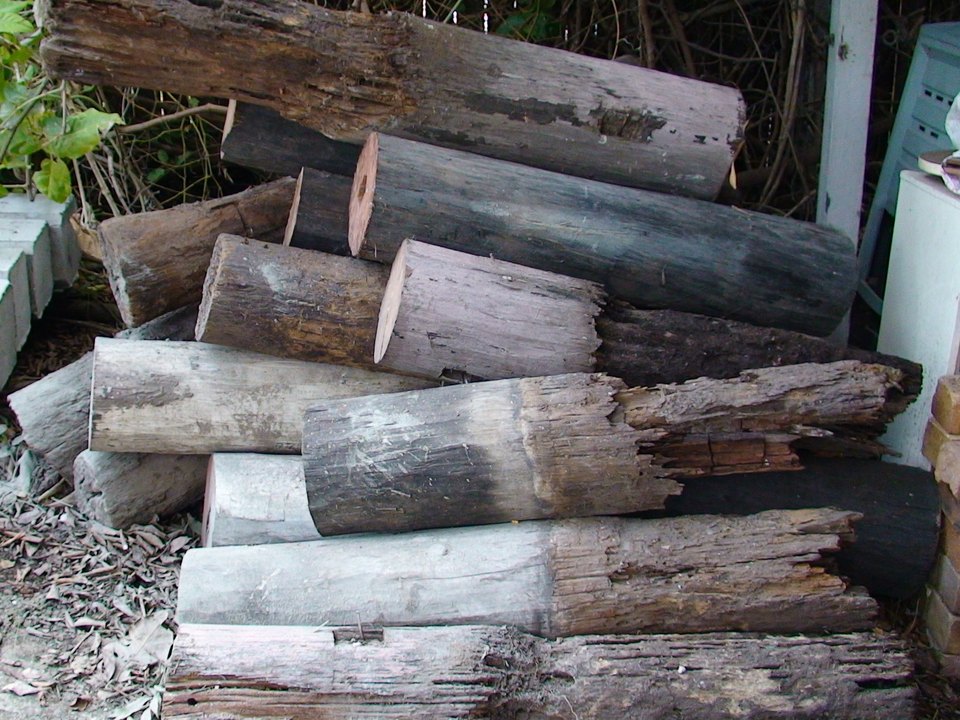
Termites damage more Australian homes each year than fire, storm and flood combined, and home insurance almost never covers it. The reliable approach is a timber pest inspection every twelve months, from $159, followed by a barrier or baiting program if activity is found. Never spray or break open a live termite trail - it scatters the colony.
- What you are actually dealing with
- What to look for
- Why they are in your home
- Why Chatswood properties get this
- Why it is worth dealing with
- How professional treatment works
- What to do before we arrive
- DIY or call someone?
- Four things you can stop worrying about
- Choosing a pest controller in Sydney
- Around Chatswood
- Frequently asked questions
What you are actually dealing with
Almost every unsuccessful treatment starts the same way: the wrong product aimed at the wrong place. Termites are not a single problem with a single answer - the species, the entry point and the conditions around the building all change what works.
Get that sequence right and a single treatment generally holds. Get it wrong and you are treating the same thing next month.
Key points
- A fixed quote should come before any work starts.
- Fix the conditions - moisture, food, entry points - or it returns.
- Treat the source, not the sightings: the nest or harbourage is the target.
- Ask what the warranty covers and for how long.
What that looks like on the ground in this part of Sydney is set out under termites in Chatswood.
What to look for
The early evidence is usually subtle, and most of it is found in places nobody looks. Worth checking for:
- Paint or plaster that bubbles, ripples or cracks with no plumbing leak nearby.
- Small piles of discarded wings on windowsills after a warm, humid evening.
- Sagging or blistered cornices where a nest has worked up inside a wall.
- Doors and windows that start sticking without any change in the weather.
- Mud packing visible in the weep holes along an external brick course.
One of these on its own may mean nothing. Two or more in the same area is worth a professional look, and it is better not to disturb the site before someone has seen it.
That is the case for booking an annual termite inspection rather than waiting for something to become obvious: it is the only stage at which the cost is small.
Why they are in your home
Treatment deals with the population; this list is what decides whether it comes back. The usual contributors:
- Dense planting and irrigation holding damp soil hard against the brickwork.
- Stored timber, firewood or offcuts stacked against an external wall.
- An untreated or breached physical barrier on an older Sydney build.
- Tree stumps and buried form-work left on the block after construction.
- Subfloor moisture from a leaking pipe, a failed shower base or poor drainage.
Most of these are fixable in an afternoon, and doing so is what turns a treatment into a result.
Why Chatswood properties get this
Chatswood (2067) sits about 9km north of the CBD, and the local housing mix is a reasonable predictor of what we find there. Termite activity in the area tends to follow the same few conditions we see across comparable suburbs.
What changes locally is access rather than method - whether there is a subfloor, how the roof void is reached, and how much external perimeter there is to treat.
The local page for the Chatswood service page has the rest of what we treat nearby.
Why it is worth dealing with
The financial exposure with termites is unusual because it sits outside your insurance. Repair bills on Sydney homes routinely run into tens of thousands, and the work is structural rather than cosmetic. Activity found at inspection is a manageable job; activity found when a floor flexes is a building repair with a pest treatment attached.
None of that is scaremongering - it is simply the reason the price goes up the longer it is left.
Because the early signs are so easy to miss, a full timber pest report every twelve months is the standard advice for Sydney homes.
How professional treatment works
A licensed technician follows a repeatable process rather than blanket-spraying a property. In order:
- Inspect and identify. Work out the species and find where the population actually sits - usually not where it was seen.
- Treat the source. Apply the right method for that species - gel bait, dust, residual, baiting system or trapping - where it does the most work and the least harm.
- Allow the method to run. Baits and colony treatments work over days to weeks; re-spraying during that window undoes them.
- Close the conditions. Identify and remove what caused it, otherwise the treatment is only a reset.
The work is logged, and if covered pests return inside the warranty period we come back at no charge.
If you want to see how the treatment is actually carried out, what the treatment involves walks through each stage.
What to do before we arrive
A little preparation makes a measurable difference to the result, and none of it takes long:
- Tell the technician what you have already applied yourself.
- Put food, utensils and pet bowls away or in sealed containers.
- Clear access to kickboards, under sinks and around appliances.
- Clear a path to the roof void or subfloor access if there is one.
- Cover or move fish tanks and turn off their air pumps.
Avoid washing down treated areas for at least a week, and resist adding your own spray on top.
DIY or call someone?
We would rather you spent $15 than $150 where $15 works. The problem is that past a certain point it does not:
- Surface application misses the voids and cracks where the population actually lives.
- Guessing the species usually means the wrong product entirely.
- Concentrations are lower and residual life shorter than professional-grade equivalents.
- Repellent sprays can split colonies - with ants especially - turning one nest into several.
If you have already tried something and it returned, that is the signal rather than a reason to try again harder.
The rest of what we handle is set out under the pest control services page.
Four things you can stop worrying about
Worth clearing up, because acting on these makes the problem harder:
- A spray from the hardware store will do. Surface products kill the few termites they touch and leave a colony of hundreds of thousands intact.
- A brick house cannot get termites. Almost every Sydney home has structural timber in the roof, frame or floor. Brick veneer is a skin over a timber frame.
- One treatment lasts forever. Barriers and baiting systems have a service life and need monitoring. An old treatment is not current protection.
- You would see them. Termites work inside timber and inside mud tubes. Most owners see damage long before they see an insect.
If you are not certain which pest you are dealing with, everything we treat lists what we treat and the signs that point to each.
Choosing a pest controller in Sydney
Pest control is licensed work in New South Wales, and the gap between operators is wider than the price difference suggests. Before you book anyone:
- Confirm they hold current public liability insurance.
- Ask for the technician's NSW pest management licence number, not just the company name.
- Ask which method they intend to use and why that one.
- Get the quote in writing, fixed, before any work starts.
- Ask what the warranty covers, what voids it, and how long it runs.
None of those questions are unreasonable, and the answers tend to sort operators quickly.
You can see who actually turns up and the qualifications behind the work.
Around Chatswood
The same van services the neighbouring suburbs, which means comparable availability in Roseville, Lane Cove North, Artarmon, Chatswood West.
We cover the whole basin rather than a few postcodes - the suburbs on our run has the full list.
Frequently asked questions
What do you charge for termites in Chatswood?
From $89 for general pest work in Chatswood, and from $159 for a timber pest inspection. Termite barriers, baiting systems and commercial programs are priced after a site visit. Nothing is charged above the quoted figure without your agreement.
How often do termite inspections need doing?
Annually is the standard advice for Sydney, and more often for high-risk properties - those with a history of activity, a subfloor that holds moisture, or heavy planting against the walls. Termite damage is excluded from almost every home insurance policy, which is why the annual check is the cheap part.
How well do you know Chatswood?
We work Chatswood and the 2067 area regularly rather than occasionally, which means the technician already knows the local housing stock and where to look first. That usually shortens the inspection.
When should the termites be gone?
For a general treatment you should see a drop within 24 to 72 hours. Where baiting is used it takes one to three weeks, because the aim is the colony rather than the foragers. A short increase in sightings early on means the bait is being taken.
What attracts termites to a house?
Almost always a combination of moisture and an easy entry point. Leaks, condensation, blocked gutters and irrigation do more to attract pests than untidiness does, which is why spotless homes get them too.
What if the problem is coming from next door?
For renters, report it to the agent in writing promptly, since that is often what decides responsibility. In a unit block the source is frequently outside your lot, and treating your own apartment repeatedly will not fix a population living in common property.
Can you just treat it without looking?
For general pest work the inspection happens as part of the visit and is not charged separately. For anything termite-related it is essential and is the deliverable in its own right, because the report determines the treatment and gives you a written record.
How do I stop them coming back?
Maintenance rather than pest control: fix the water, close the gaps, cut the food supply and reduce clutter where things can shelter. Households that would rather not think about it move onto a regular program instead.
Get a fixed price on termites
Elite Pest & Termite Solutions covers 650+ Sydney suburbs with licensed, insured technicians, child and pet-safe methods and a 6-month warranty on general treatments. Fixed quote in about 30 minutes.