
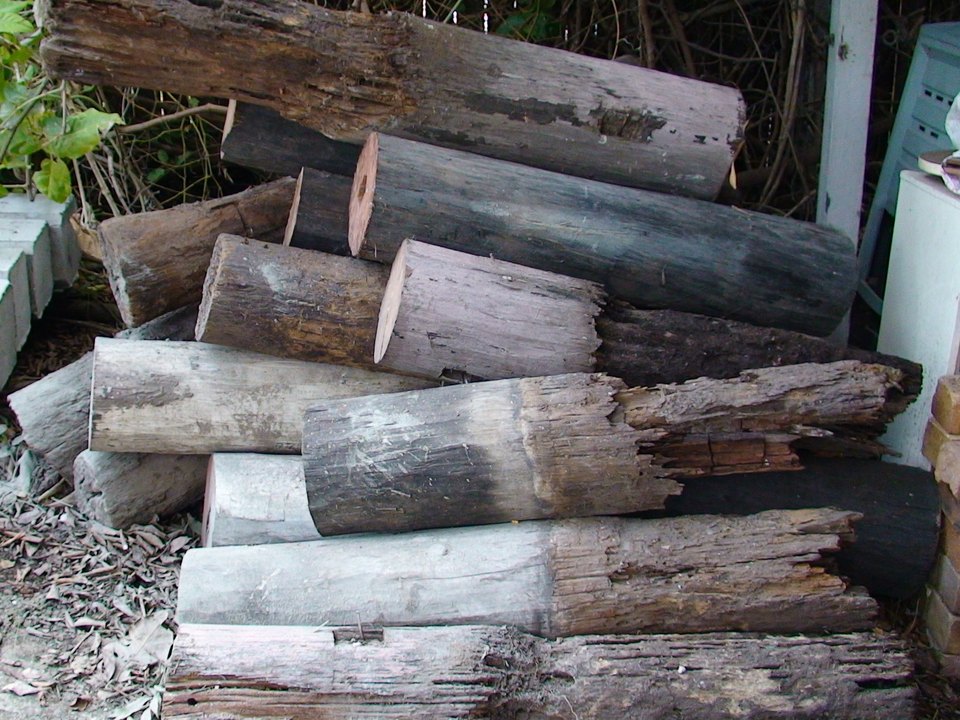
Termites damage more Australian homes each year than fire, storm and flood combined, and home insurance almost never covers it. The reliable approach is a timber pest inspection every twelve months, from $159, followed by a barrier or baiting program if activity is found. Never spray or break open a live termite trail - it scatters the colony.
- Before you treat anything
- What to look for
- Termites in Cronulla: the local picture
- Why it is worth dealing with
- When termites are worst in Sydney
- How the treatments differ
- How professional treatment works
- The safety question, answered properly
- DIY or call someone?
- Questions worth asking first
- The surrounding area
- Frequently asked questions
Before you treat anything
The useful question is not which spray to buy but where the population actually lives. With termites, what you see moving is a small fraction of what is there, and treating only that fraction is why problems come back.
So the sequence matters: identify, locate, treat the source, then close the conditions. Skip a step and you are paying again within weeks.
Key points
- Early action is consistently cheaper than waiting for certainty.
- A fixed quote should come before any work starts.
- Identify the species before treating - the right product depends on it.
- Treat the source, not the sightings: the nest or harbourage is the target.
What that looks like on the ground in this part of Sydney is set out under how we treat termites in Cronulla.
What to look for
You rarely see the population itself first - you see what it leaves behind. The signs that matter:
- Doors and windows that start sticking without any change in the weather.
- Mud packing visible in the weep holes along an external brick course.
- Floorboards that feel spongy underfoot, particularly near wet areas.
- A faint musty, earthy smell in a closed room or subfloor.
- Thin mud veneer filling cracks in skirtings, architraves or door frames.
If more than one of those applies, treat it as confirmed rather than possible. Disturbing the area first makes identification harder.
A technician carrying out an annual termite inspection is looking for exactly these conditions, and documents them whether or not there is live activity.
Termites in Cronulla: the local picture
We are in Cronulla (2230) regularly. Being about 22km south of the CBD, it shares the conditions of the suburbs around it, and termite activity here follows the same drivers.
What changes locally is access rather than method - whether there is a subfloor, how the roof void is reached, and how much external perimeter there is to treat.
We work across this area regularly - our work across Cronulla lists the treatments we carry out locally and the response times we hold to.
Why it is worth dealing with
The financial exposure with termites is unusual because it sits outside your insurance. Repair bills on Sydney homes routinely run into tens of thousands, and the work is structural rather than cosmetic. Activity found at inspection is a manageable job; activity found when a floor flexes is a building repair with a pest treatment attached.
Put plainly: the problem does not stay the same size while you decide.
That is the case for booking a full timber pest report rather than waiting for something to become obvious: it is the only stage at which the cost is small.
When termites are worst in Sydney
Termites stay active in Sydney all year, but the warm, humid stretch from October to March is when colonies expand fastest and when alates swarm after rain. Autumn and winter are the better months for inspection work: activity is slower, so evidence sits undisturbed and a technician can read the history of a subfloor more clearly.
Knowing where you are in that cycle explains a lot of what you are seeing, and it affects when treatment is most effective.
How the treatments differ
The honest trade-offs:
| Method | Works well for | Limitations |
|---|---|---|
| Chemical soil barrier | Full perimeter protection, long service life | Needs trenching or drilling; priced after inspection |
| Dusting active workings | Fast knock-down on a found trail | A first step, not a complete solution |
| Above-ground baiting | Targets active workings directly | Only where live activity is accessible |
| Annual timber pest inspection | Finds activity while it is still cheap | Detection, not treatment |
Most real jobs combine two of these rather than relying on one. If a quote only mentions a spray, it is worth asking what else is planned.
We set out the full process, timelines and warranty terms under how termite control works.
How professional treatment works
There is a defined process behind it, and knowing it makes the invoice easier to read:
- Inspect and identify. Confirm the species, locate nests and harbourage, and note the conditions sustaining them.
- Treat the source. Apply the right method for that species - gel bait, dust, residual, baiting system or trapping - where it does the most work and the least harm.
- Allow the method to run. Baits and colony treatments work over days to weeks; re-spraying during that window undoes them.
- Close the conditions. Identify and remove what caused it, otherwise the treatment is only a reset.
Every Elite Pest treatment is carried out by a licensed, insured technician and general pest work carries a 6-month warranty.
There is a fuller explanation of professional termite control, including what is and is not included.
The safety question, answered properly
Short answer, yes. The longer answer is about method:
- Products are APVMA-registered and applied at label rates by a licensed technician.
- Fish tanks are covered and pet bowls and bedding moved before any treatment.
- You are given a specific re-entry time, usually just until treated surfaces are dry.
- Baits, gels and dusts go into cracks, voids and secured stations - not across open surfaces.
We would rather adjust the approach than have you worry about it afterwards, so raise it on the phone.
You can see who actually turns up and the qualifications behind the work.
DIY or call someone?
This is worth being straight about, because DIY is not always the wrong answer. It is the wrong answer once a population is established, for reasons that are fairly mechanical:
- Surface application misses the voids and cracks where the population actually lives.
- Spraying over bait placements makes them unpalatable and wastes the treatment.
- Repellent sprays can split colonies - with ants especially - turning one nest into several.
- Guessing the species usually means the wrong product entirely.
If you have already tried something and it returned, that is the signal rather than a reason to try again harder.
The rest of what we handle is set out under the full range of treatments we carry out.
Questions worth asking first
The cheapest quote is often the one that gets repeated. Things worth confirming:
- Be wary of a price quoted over the phone without any questions about the property.
- Ask for the technician's NSW pest management licence number, not just the company name.
- For termite work, ask whether you receive a written timber pest report.
- Get the quote in writing, fixed, before any work starts.
- Ask which method they intend to use and why that one.
A good operator will answer all of those without hesitation. Hesitation on any of them is useful information.
That is worth checking before you book anyone, including us - about the team covers our licensing, insurance and how long we have been doing this.
The surrounding area
Our Cronulla technician covers the surrounding suburbs on the same run, so response times are similar across the area: Dolans Bay, Burraneer, Bundeena, Port Hacking.
If your suburb is not mentioned above, our full service area will confirm whether we are out that way.
Questions we get asked
How much does it cost to get rid of termites in Cronulla?
From $89 for general pest work in Cronulla, and from $159 for a timber pest inspection. Termite barriers, baiting systems and commercial programs are priced after a site visit. Nothing is charged above the quoted figure without your agreement.
How often do termite inspections need doing?
Every twelve months, and that is the minimum rather than a precaution. A colony can work inside timber for months without any visible sign, and insurance will not cover the repair, so the inspection is the only point at which this is inexpensive.
Do you service Cronulla?
Yes - Cronulla (2230) is part of our regular run, along with the suburbs around it, so availability is normally a day or two. Call 1300 313 373 for a fixed price in about thirty minutes.
Is there a guarantee on the work?
Yes - six months on general pest work. A recurrence of the treated pest inside that window is a free return visit. A different species arriving later is a new job, and a recurrence traced to an unfixed cause such as a leak sits outside the cover.
How quickly will I see a difference?
Most households notice a difference in the first few days, with the full effect over one to three weeks depending on the method. If nothing has changed by the timeframe your technician gave you, call us - that is what the warranty is for.
What if the problem is coming from next door?
In a tenancy it usually depends on whether the problem existed at the start of the lease and on the terms of the agreement - raise it with the agent in writing either way. In a strata building, anything in common property such as risers, voids and bin rooms is the owners corporation's responsibility.
Is DIY worth trying first?
For a single insect, yes. For an established population, retail products usually fail because they kill what they touch and leave the nest producing. Repellent sprays can also split ant colonies, which turns one problem into several.
What attracts termites to a house?
Almost always a combination of moisture and an easy entry point. Leaks, condensation, blocked gutters and irrigation do more to attract pests than untidiness does, which is why spotless homes get them too.
Need someone to look at it?
Licensed, insured and working across 650+ Sydney suburbs. You get a fixed price before anything starts, a 6-month warranty on general pest work, and a technician who explains what they found.