Works well for
Web builders settling onto the surfaces we treat: black house spiders, redbacks and daddy long-legs in the garage.
- Fewer webs across the house
- Egg sacs removed before hatching
- Fewer redbacks around furniture and fences

Spider Control in Rose Bay 2029 — local technicians, fixed prices and a written report. Spider treatment starts from $89.
Real, verified feedback from people we've helped — straight from Google.
Where Rose Bay sits, who covers it and what it costs.
Our Eastern Suburbs technicians cover Rose Bay and the rest of 2029 as a matter of course - it is only about 5.3 km east of the city. Our technicians are through Rose Bay most days, so same-day attendance is usually available.
A lot of our Rose Bay jobs are in the streets around Woollahra Golf Club and Woollahra Park, and we are out near Rose Bay Beach regularly enough that the technician usually knows the access before they arrive.
This is the Waverley, Randwick and Woollahra area, and our runs here also take in Dover Heights, Bellevue Hill and Point Piper. Being this close to the coast, sub-floors and ground-floor bathrooms stay damp most of the year, which is the condition that keeps activity going.
What we see in Rose Bay is ground-floor units with a damp sub-floor, and houses where the garage sits below the living level. Describing it accurately when you book saves a second visit.
Every part of 2029 is covered as standard.
Bookings for 2029 are confirmed the day before with a set arrival time, not an all-day window. Jobs at Dover Heights and Bellevue Hill often share the same run, which is how earlier slots come up.
Web density is a food-supply reading. Where it comes back fastest around a Rose Bay property tells us where the insects are, and that is usually a light left on overnight.
Males wander in warm, humid weather looking for females, which is when Rose Bay households find them in a garage, a laundry or the bottom of a pool.
Most spiders found indoors in Rose Bay homes came in by accident - under a door, through a vent, or on something carried in. They are not establishing; they are lost, which is why door seals do more than spraying skirting boards.
Two of these warrant real care. The rest are mostly a nuisance, but they are why webs reappear.
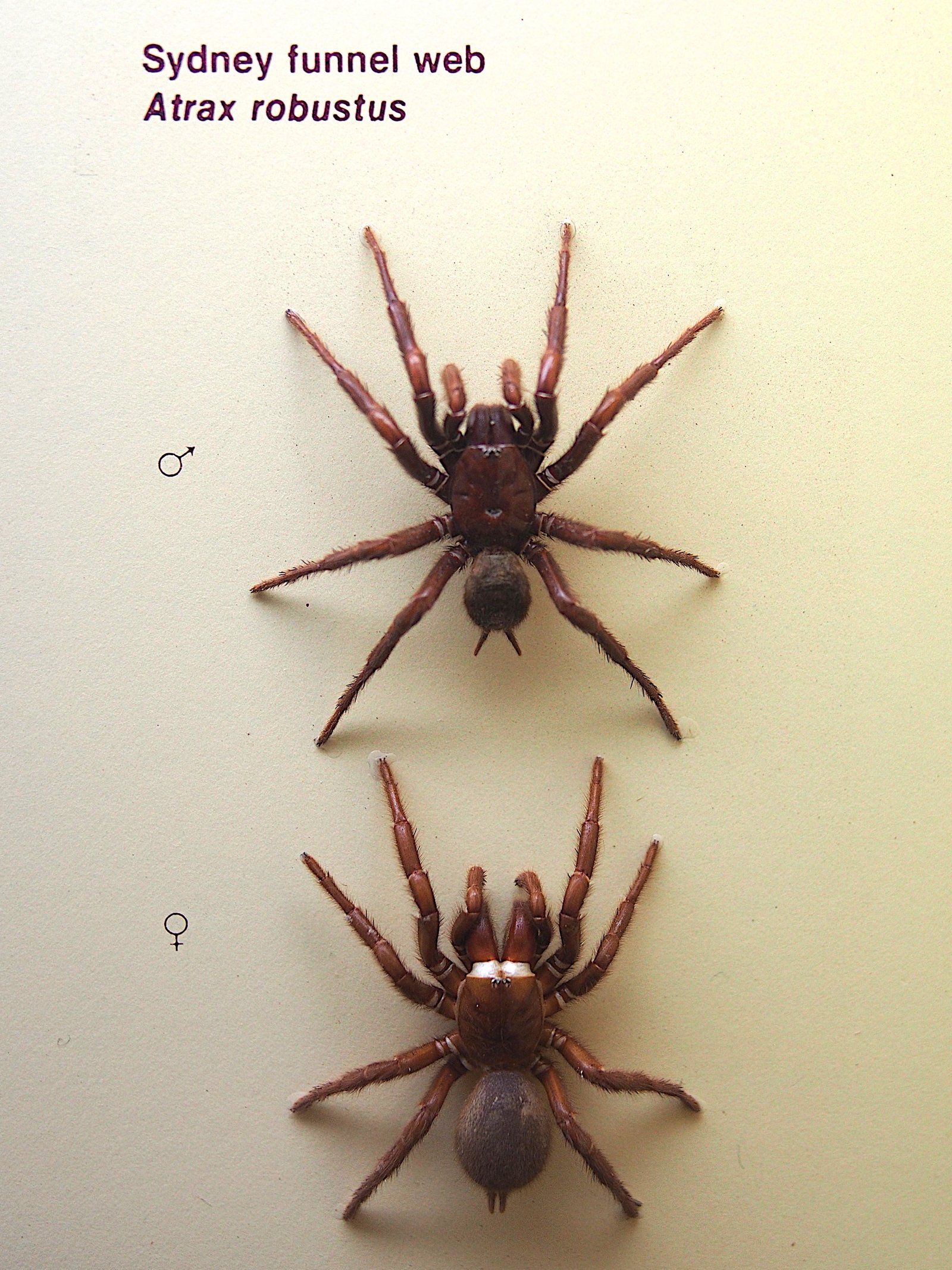
A 2 to 4 cm glossy black spider that burrows into cool shaded ground - under rocks, logs, houses - lining the burrow with silk. Wandering males appear in summer and autumn, and a bite is a medical emergency.
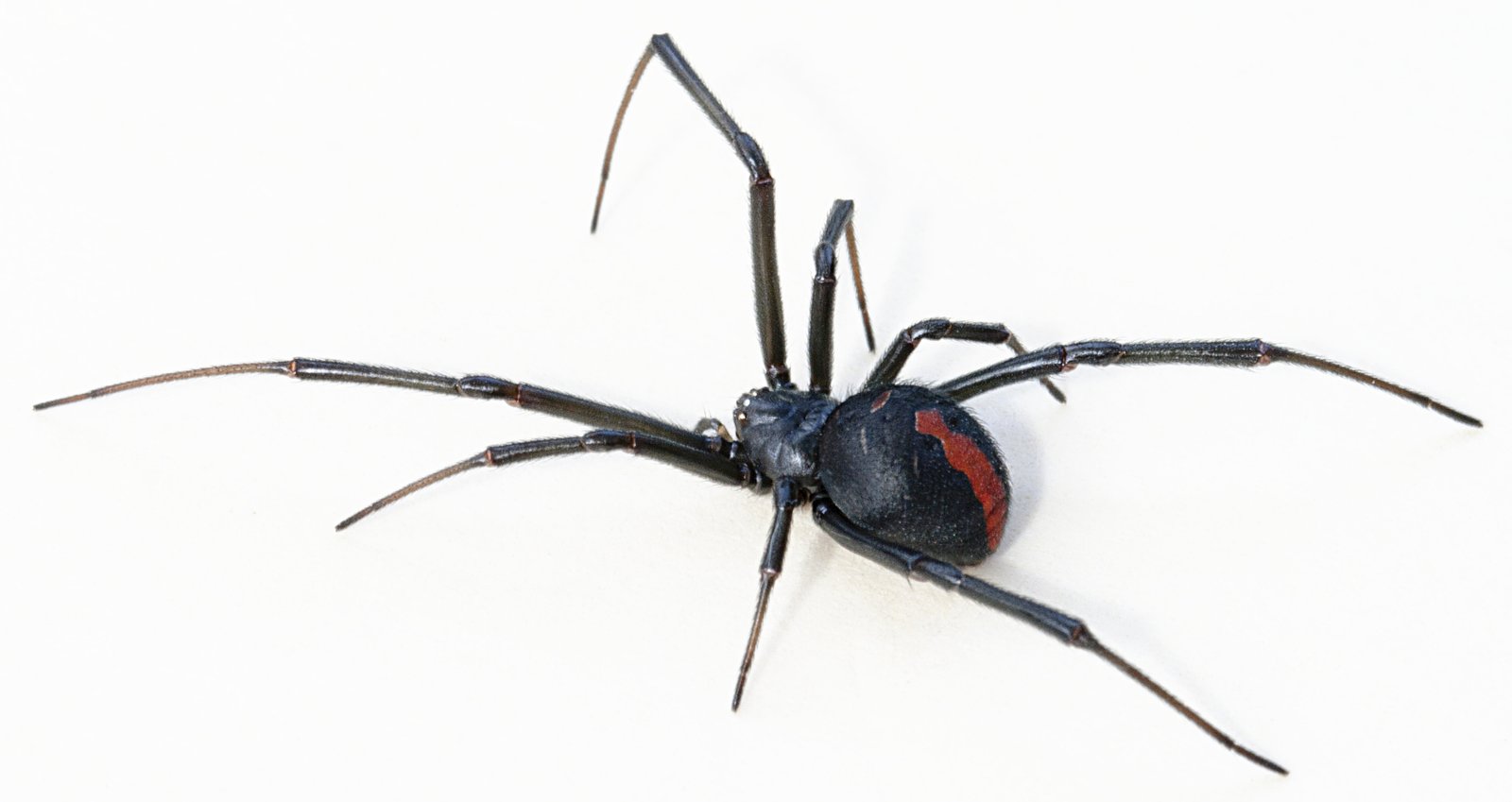
Females are black with a red dorsal stripe, spinning untidy webs in dry sheltered places - beneath outdoor chairs, in letterboxes, under pot rims, on pool fences and in sheds. A bite can be severely painful and needs medical advice.
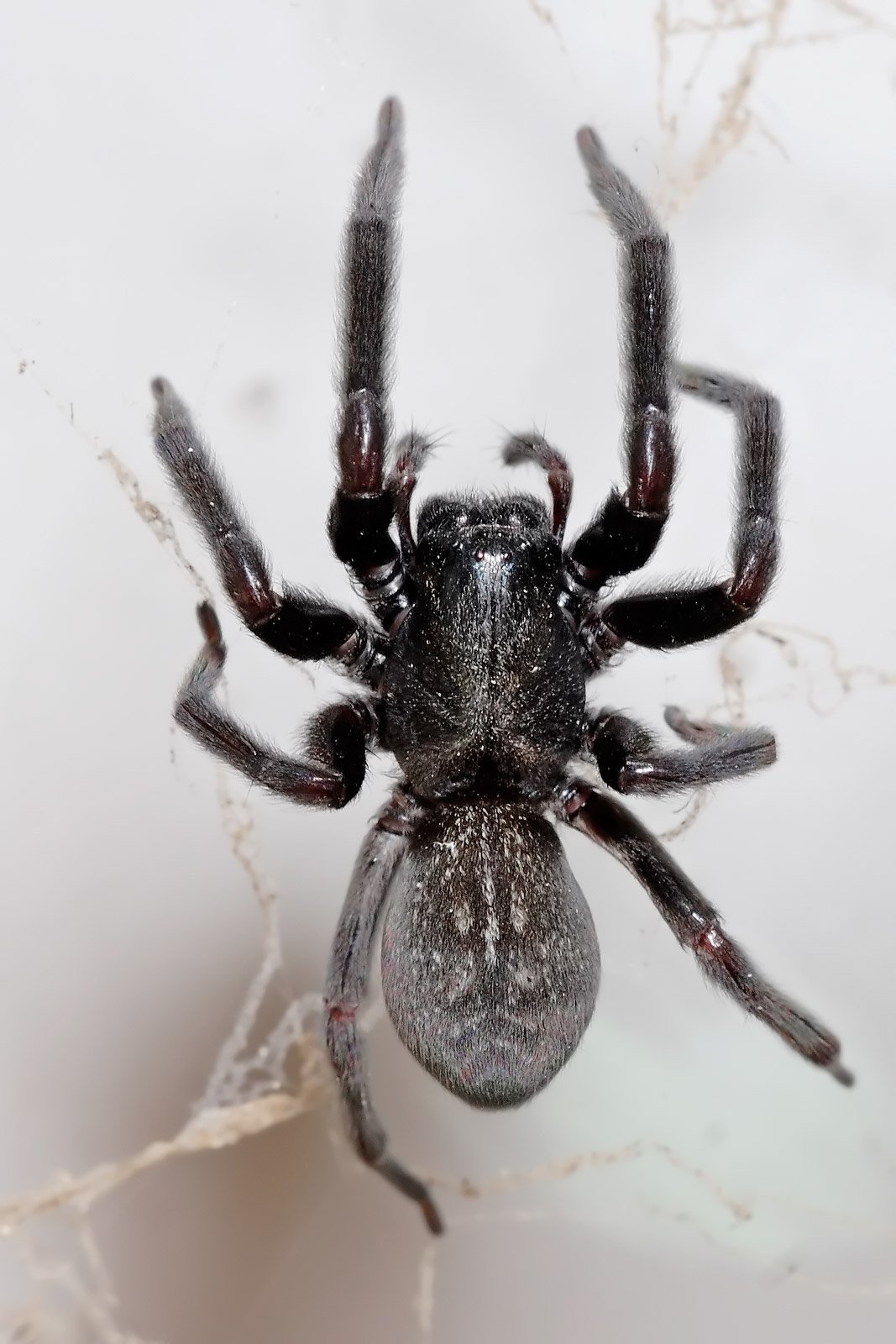
A stocky dark spider making lacy, funnel-shaped webs in window frames, gaps in brickwork and the eaves. Shy, but its webs catch dust and return quickly without treatment.
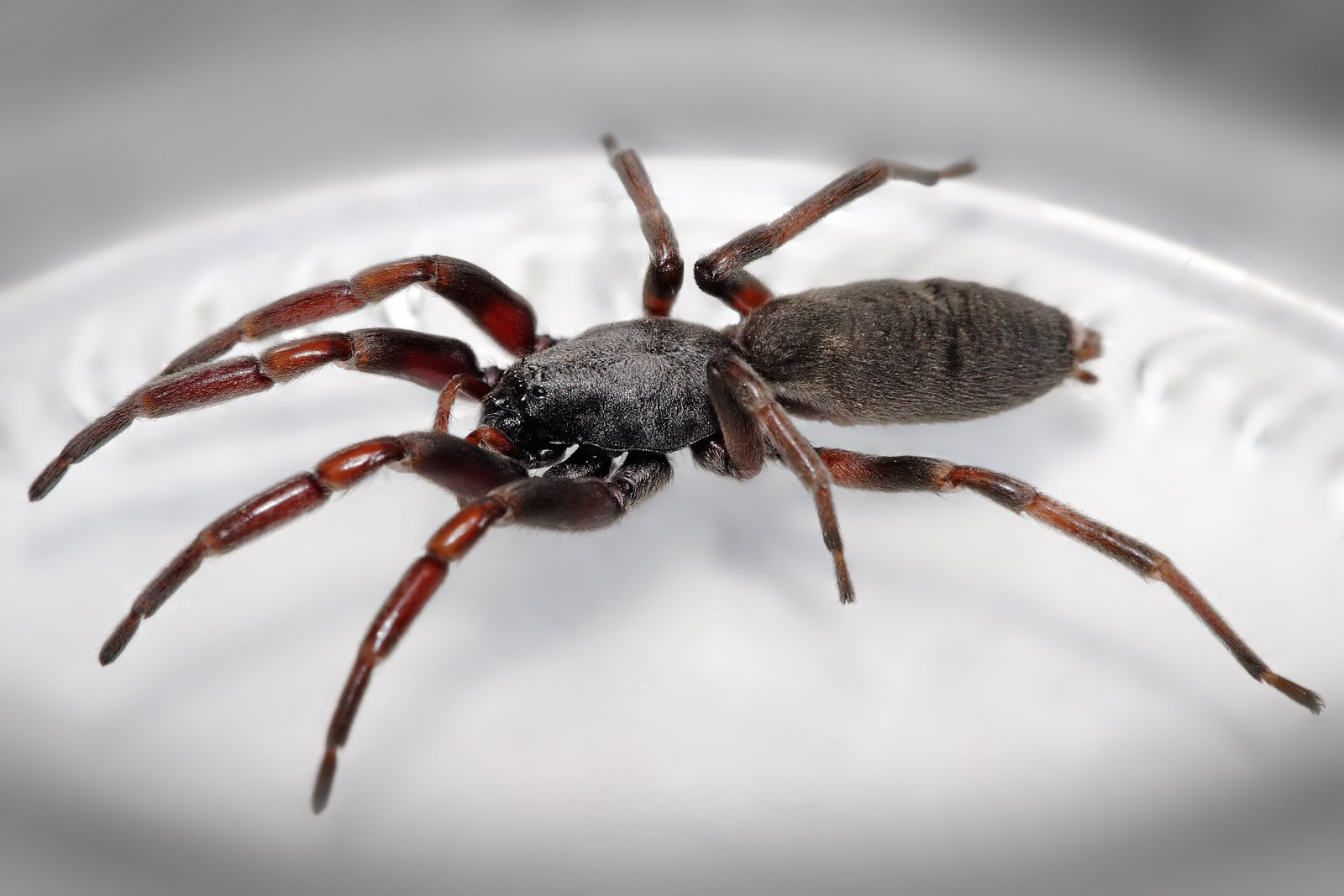
A slim, dark roaming hunter with a pale tip on the abdomen. It wanders indoors at night hunting other spiders, sometimes into bedding and clothes. Bites are painful but a large study found no ulcers.
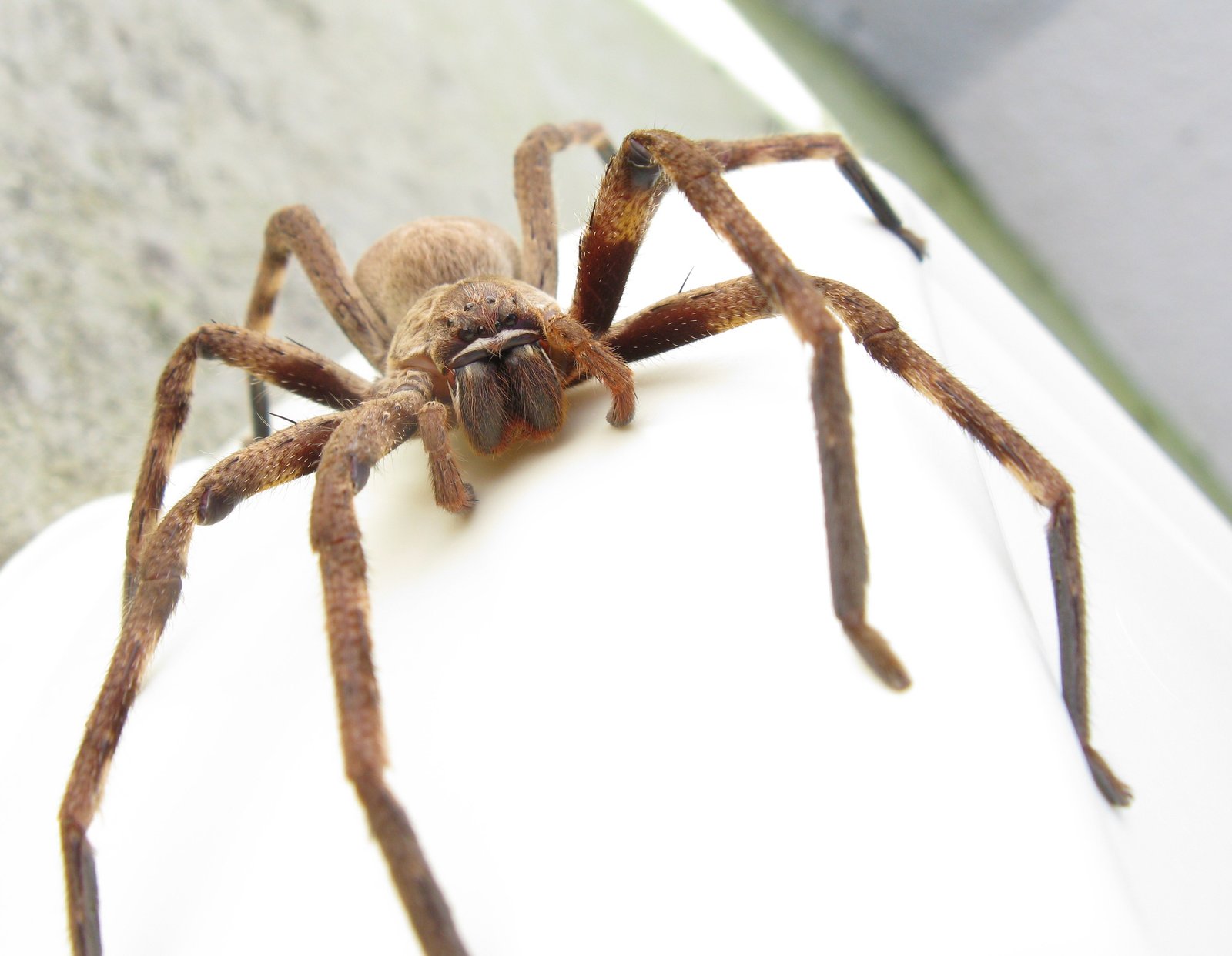
Large, flattened and fast-moving, sheltering under bark, in wall cavities and behind curtains. Alarming to find in the car or bedroom, yet timid. It hunts instead of webbing, so fewer come back once their prey insects are controlled.

An Elite photo: a huntsman found inspecting the exterior of a Sydney home. Eaves, window heads, meter boxes and garden edges come before treatment.
General guidance based on Australian Museum and healthdirect advice. It is not a substitute for medical care. In an emergency call 000, and for advice call the Poisons Information Centre on 13 11 26.
| Spider | Risk | First aid | Get help |
|---|---|---|---|
| Sydney funnel-web | Potentially life-threatening venom that acts on the nervous system | Apply a pressure immobilisation bandage as for a snake bite, keep the person still | Call 000 immediately |
| Mouse spider | Bites are unusual, though some have caused funnel-web-like illness | Apply pressure immobilisation, treating any large black spider bite as funnel-web | Call 000 immediately |
| Redback | Pain that can become severe, sweating and feeling unwell; antivenom exists | Do NOT apply a pressure bandage. Wash, then apply a cold pack wrapped in cloth | Seek medical care if pain is severe or symptoms develop |
| White-tailed spider | Painful, with redness and itch at the site; no ulceration in a study of 130 confirmed bites | Clean the bite, then use a cold pack | See a doctor if symptoms worsen or persist |
| Black house spider, huntsman and others | Usually limited to pain and swelling at the site | Wash the area, then a cold pack | See a doctor if you feel unwell or symptoms persist |
If you are not sure what bit you and it was a large black spider, assume funnel-web and call 000. A pest treatment reduces spider numbers; it cannot guarantee a funnel-web will never wander in.
One call to a licensed Sydney technician gets you straight advice and a fixed quote within 30 minutes.
Male funnel-webs are out of their burrows mostly in summer and autumn looking for females, the Australian Museum notes. That is the encounter season.
Humid nights after rain bring more wandering males. They shelter in shoes left outside, laundry on the floor, garages and gaps under doors.
Backyard pools catch wandering males, and they survive underwater for hours. Use the skimmer net every time, never your hand.
Its range runs from the Central Coast south as far as the Georges River, and west to about Baulkham Hills, concentrated in bushy sheltered suburbs.
Outside first, because that is where most spiders live and breed.
Walking the property with you, we check eaves, window frames, fences, rockeries, retaining walls, subfloor vents and garden margins.
All webs and egg sacs are brushed off eaves, pergolas, outdoor furniture and garages, which stops a fresh hatch in the treated zone.
The residual goes onto external walls, the eaves, window and door frames, weep holes and the resting places.
Funnel-web risk brings the ground beside the house into the treatment - the rockery, the retaining wall, the sleepers and the subfloor edge.
Indoors it is targeted: corners, skirting and wardrobes where required, plus dusting of any accessible roof void and subfloor.
Web builders settling onto the surfaces we treat: black house spiders, redbacks and daddy long-legs in the garage.
Huntsmen and white-tails hunt instead of webbing, so they meet less of the treatment. Bringing their prey down is what reduces them over time.
Nobody can promise a wandering male funnel-web will never cross the yard on a humid night. Treatment reduces harbourage near the house - first aid and sensible habits do the rest.
The garden orb weavers stringing webs across paths are harmless. We clear webs near doors and walkways, though leaving some in the garden helps keep flying insects down.
Simple habits that matter most in funnel-web and redback country.
| Season | What spiders are doing | What to do |
|---|---|---|
| Spring (Sept to Nov) | Egg sacs hatch, webs multiply on eaves and fences | Book a treatment and clear webs before spiderlings spread |
| Summer (Dec to Feb) | Males of the funnel-web start to wander; redbacks busy around outdoor seating | Check the pool and shoes, inspect outdoor areas, keep door seals working |
| Autumn (Mar to May) | Funnel-web wandering carries on, increasing after rain | Be careful on humid nights, and garden in gloves |
| Winter (Jun to Aug) | Fewer webs outside; huntsmen shelter indoors and in cars | Good time for pest-proofing gaps before spring |
We treat the fence line and the first few metres of garden on a bush-backed Rose Bay block, because that is the crossing point.
Treatment reduces risk; it does not remove the need for habits. Children should know not to pick spiders up and not to reach into a pool or a woodpile by hand.
Pool pump housings are sheltered and dry, which makes them classic redback sites. We check them on every Rose Bay property that has one.
Which spiders we found, and what they actually mean for your family - you get both.
Not just the eaves - the ground harbourage next to the house is treated too.
Straight advice about what treatment achieves, wandering funnel-web males included.
Our general spider treatments carry a 6-month warranty. Webs rebuilding? We return.
Everything you need to know before you book. Still unsure? Call us — we're happy to help.
Get a Free QuoteSpider treatment starts from $89. What changes the figure is the size of the building, how many areas are affected and the access. You get that number up front for Rose Bay 2029, with no call-out fee. Every general treatment carries a 6-month warranty.
Same-day attendance is usually available. Rose Bay is about 5.3 km east of the CBD in the Eastern Suburbs, and we give you a firm arrival time rather than an all-day window.
The sea air is the factor people miss. It keeps sub-floors and ground-floor bathrooms damp long after summer, which is enough to keep spiders going.
Coastal housing here is a mix, but the damp lower level is consistent across most of it.
Yes. Houses, townhouses, units, strata common property, rentals and commercial sites in Rose Bay 2029 are all part of what we do, and the paperwork is the kind agents accept.
Yes, applied correctly. Products are registered for this use, placed out of reach rather than across open surfaces, and you will know what to stay off and for how long.
Most of the time you can carry on as normal. If a particular area needs to be empty we will flag it when we arrive and it is rarely more than a couple of hours.
Allow one to two hours for a typical Rose Bay property. Larger homes, or ones where the problem has spread, take longer and we will say so when we quote.
Every general treatment carries a 6-month warranty. So if they turn up again within the warranty, ring us and we will attend.
All of them. Rose Bay sits alongside Dover Heights, Bellevue Hill, Point Piper and Bondi in our coverage, and they are serviced on the same schedule.
Photographs from Elite jobs across Sydney — not stock imagery.
Friendly, fully insured technicians and a no-obligation quote inside 30 minutes.